

Carried Without Choosing
Making from Memory: | Inherited | A 100 Day Creative Practice | Day Nine

Thank you all so so so much for your well wishes for Jon’s surgery today. By the time you are reading this, he’ll probably be already in the operating room, and I’ll be in the family waiting room, trying to catch up, as usual. Yes, I am nervous. We’ve never been dealt with severely limited mobility and live in a 120-year-old house with stairs at every entrance and, of course, inside, as well. Plus, Jon and I have a very distinct division of labor wherein, well, he does basically everything related to keeping the house from falling down, which includes not only, you know, things that keep the house from falling down but also, keeping the refrigerator stocked and the clothes clean, etc., etc., etc. So we’re going to be navigating some extreme role reversal here.
Your encouragement and love mean the world.
Meanwhile … today is Day Nine, and nine is an important number for Jon and me, so hopefully that’s a good sign.
Also, the obligatory disclaimer: If you’ve missed a day, or two, or more—just start where you are. We’re about to start a new chapter anyway! And if you haven’t joined the project or the chat yet, here’s how:
Join Jeannine Ouellette’s subscriber chat
Plus more cool stuff from the chat (every day is a feast for my imagination!):
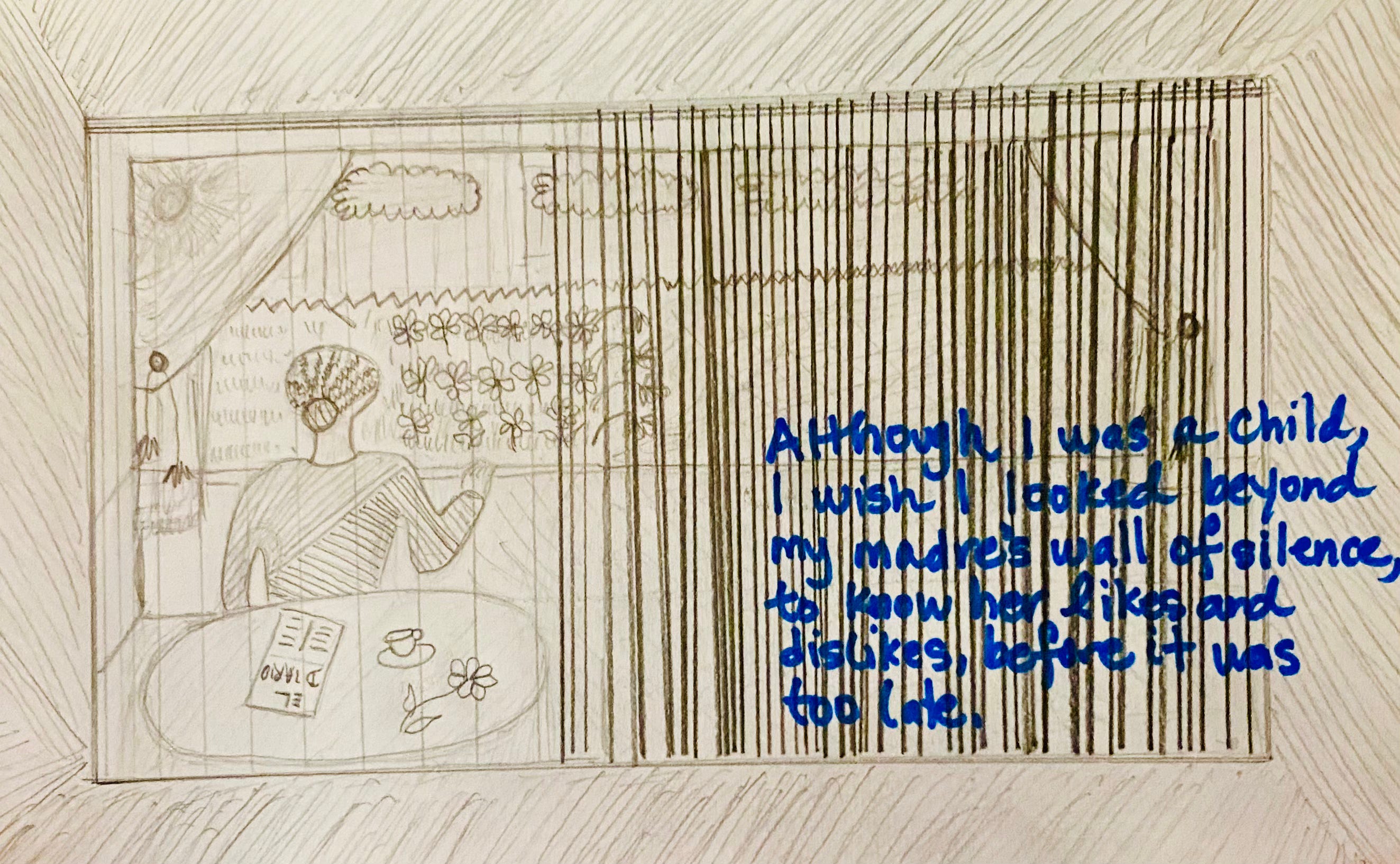
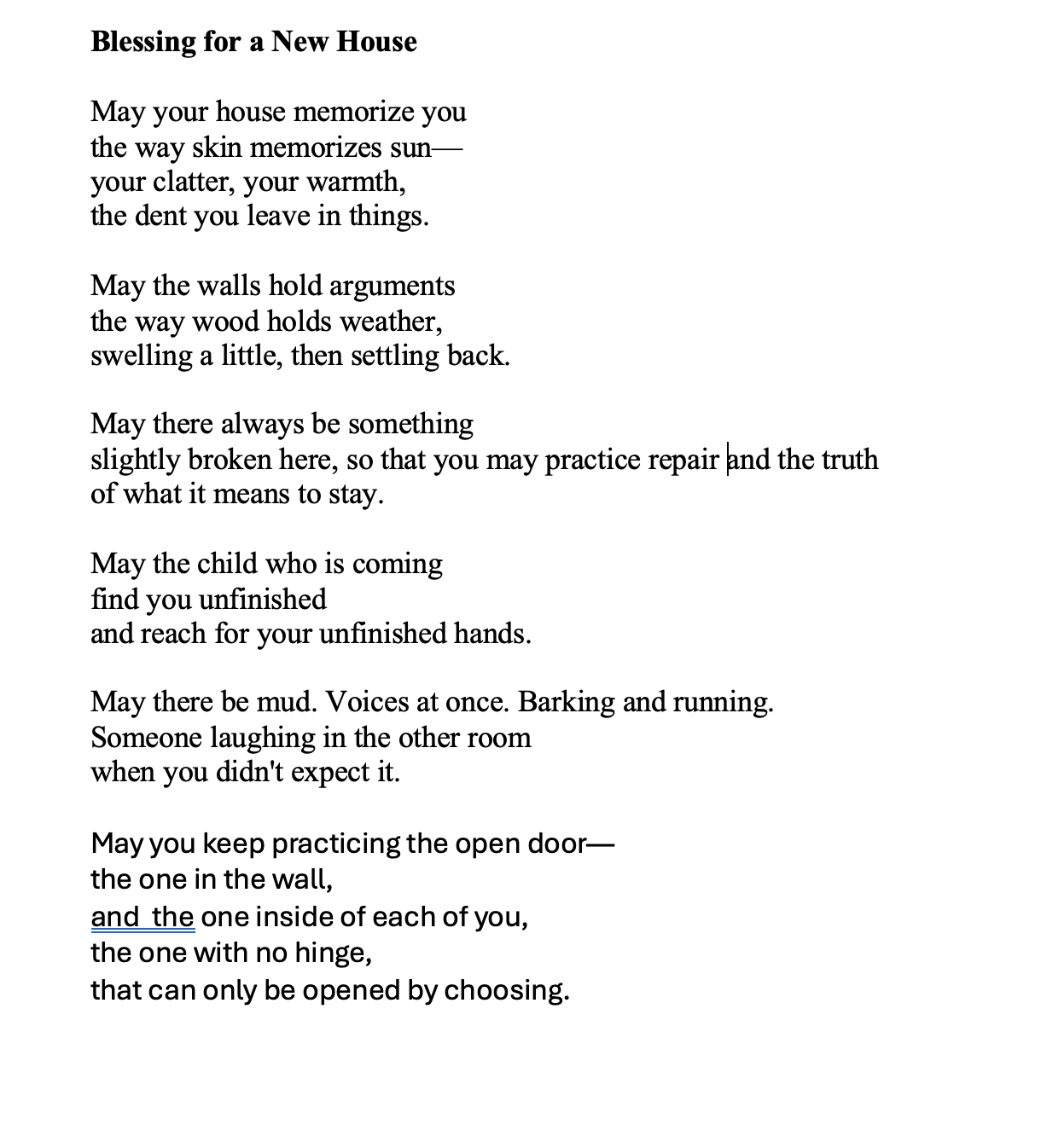
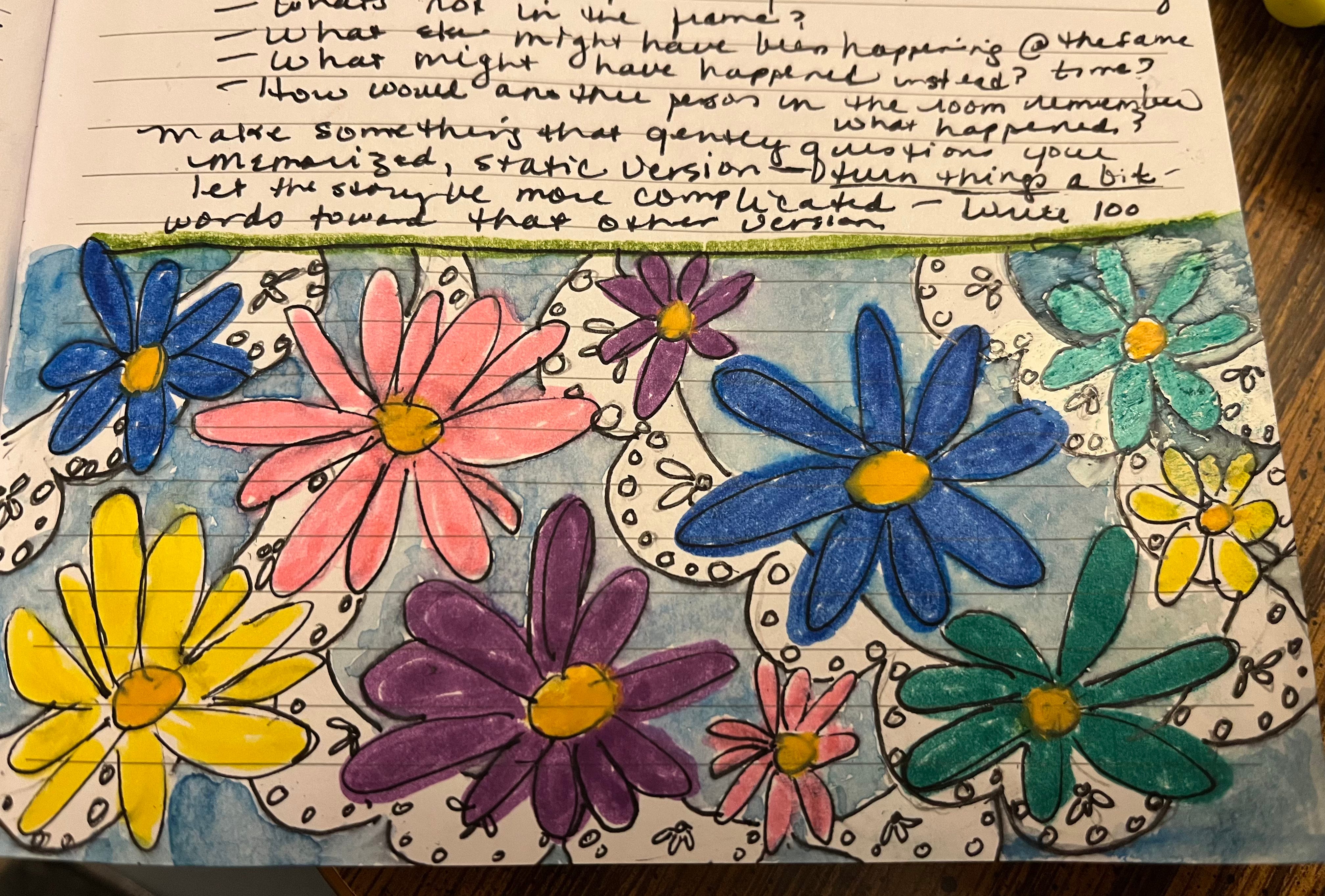
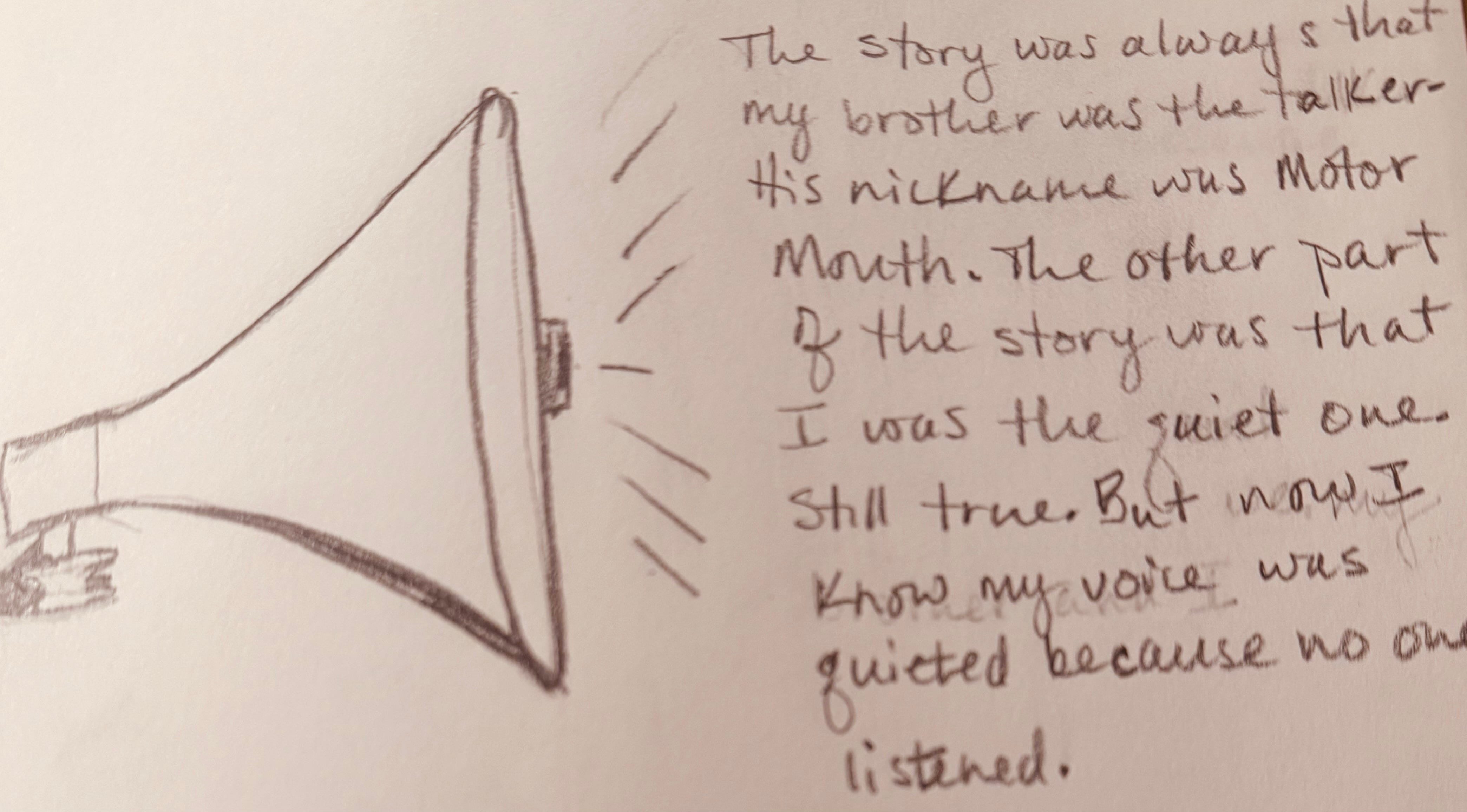
And for Day Nine, we’re going to try to explore an old memory and inheritance.
Every family is, among other things, a storytelling institution—a system for deciding which memories get passed down, which get buried, and which get transformed, almost beyond recognition, in the transmission. The psychologist and memory researcher Daniel Schacter writes that memory is less a recording than a reconstruction, and nowhere is that more vivid than in the stories families tell about themselves: the founding myths, the cautionary tales, the legends of ancestors who were braver or more villainous or more tragic than anyone living could quite verify. By the time a story reaches the third generation, it has passed through so many minds, so many tellings, so many unconscious edits and emotional colorings that it has become something genuinely new—and yet we carry it as though it were fact, as though we were there.
The poet and essayist Claudia Rankine writes in Just Us that “the condition of being human is to be continuously misremembered by others and to misremember them.” This is perhaps nowhere more true than within families, where the stakes of the stories are highest and the tellers are the most personally invested in specific outcomes. The stories we inherit are never neutral. They carry agendas, wounds, wishes, and silences—especially the silences, which are their own kind of inheritance. What we are not told shapes us as surely as what we are. As the novelist Toni Morrison said in a 1998 interview, “If you have some information you want to keep from your children, put it in a book.” The things families don’t say out loud have a way of living in the body anyway, passed down not in words but in posture, in reflex, in the way we flinch at certain kinds of questions.
The one family legend that dominated my childhood, a legend obscured by fire and smoke and injury and confusion, is that of the explosion on Park Point that took place when I was a baby, or when my older sister was a baby, one or the other. We heard this story so many times growing up—and the explosion had such a significant impact on our lives—that I had to include it in The Part That Burns. But since none of the story could be verified by anyone directly, the best I could do was tell it as the story I came to see in my own imagination, after years and years of hearing it in fragments:
My mother’s Smithville home was a squat clapboard farmhouse in a field on the edges of Duluth. I never asked if the chickens that lived upstairs in winter had dominion over the whole second floor. Mom only talked about the squawking and the shit. Details make the legend, and the legend forms its own truth. Another legend—though this could be wrong, too —is how once during an overnight bender, Mom’s uncles burned down the outhouse. When she trudged across the sopping grass the next morning, all she found to piss in was a hole in the ground and a pile of smoking ash. What I know for sure, though, is that Grandma and Grandpa Krause were both dead by the time Mom turned seventeen, the same year she got pregnant and married my father.
Then the party on Park Point.
Here’s how I imagine that thick summer night. Mom was eighteen and smoking True Blues, her teased hair sprayed stiff, Coral Candy lipstick to match her dress. My father was a young James Dean, what with his tight Levi’s and leather jacket, hair slicked back with Brylcreem. As for me, I was up the hill in the West End at Aunt Flossie’s—Mom had roped her younger sister into babysitting. I was probably asleep. Maybe crying. Maybe gazing at Flossie with my watery newborn eyes, wise and floating. I was still easy then.
Park Point is a narrow, seven-mile sand spit across the metal lift bridge from Duluth’s working harbor. Stretching south from the port of Duluth, the point divides the mean waters of Lake Superior from Superior Bay and the Duluth Harbor Basin. Later my mother would tell me how the beach shack shook that night as bodies packed in by the dozen, everyone smoking and drinking and shouting over each other and over the songs that poured from the record player—“Hey Jude” and “Mrs. Robinson” and “Sunshine of Your Love.” Fumes from the hardboard-processing plant across the bay filled the air. High above the lake, a flat disc of moon hung like a nickel, slicing open The Part That Burns 82
the black water with a sharp tunnel of light. In the house, faces shone and T-shirts clung damp across chests and under arms. Mom sat on the green brocade couch in the postage-stamp living room, her long legs crossed at the knee, the last of her cigarette in one hand, a warm beer in the other, her two best friends on either side of her also smoking and drinking.
Mom’s cheeks, round and high, glowed with alcohol and summer. Glowed with sex. But her lazy eye went loose—the patch she’d worn as a child for her amblyopia had never corrected the problem entirely—as she watched her young husband holding court in the harvest gold of the kitchen. He was telling his best story, Mom could see, the one about his motorcycle accident on Skyline Parkway. It was obvious in the way he gestured with his arms and his hands, indicating the road ahead, indicating the rain, the oncoming car. It was also evident in how the women’s lips parted, how their eyes softened with want. Mom clenched her jaw. But wait: he had married her, hadn’t he? She sucked in her stomach, still fleshy from me, and yanked at her thick bra straps to hoist up her breasts, hard as rocks and hot with milk. Christ, though. She wanted more.
The friend on Mom’s right side leaned in and pointed toward my father, whispered something pungent with beer and tobacco. Mom threw her head back and laughed. She tapped her cigarette and watched the long, soft snake of ash fall to the floor.
Then: an enormous hollow boom and blinding light. Bodies and furniture rose weightlessly above the ball of fire as windows blew out and the walls of the shack collapsed in four directions, falling out like playing cards. The pitched roof billowed up fifty feet closer to the moon before crashing to the ground again.
A gas line had busted under the floorboards.
Mom’s two best friends died instantly, while Mom was thrown a dozen feet from the house before landing like a cloth doll on the dirt, shoulder ripped from socket, ear dangling from scalp. We thought she had died, Aunt Flossie always said. Too many people jumping up and down, is how Mom always The Part That Burns 83
told it. She flicked a cigarette, my dad continued to say so many years later that it seemed cruel, really, to blame Mom still.
Several people were killed in that explosion. As the house burned, flashing lights flooded the sandbar in red and blue, sirens howled across the water as squads and fire trucks and ambulances rushed to find the house already reduced to blackened sticks.
My father, unhurt, watched it smolder.
The brain is an extremely fragile organ. It is made up of delicate soft tissue that floats inside the skull. The severity and permanence of injury to the brain depend on the degree or extent of damage. Specific scale scores should always be used to measure damage to the brain in order to determine the right treatment. Treatment should begin as soon as possible and continue as long as necessary. Should is a slippery word. My mother’s ear was sewed back on. Her shoulder was pinned together. That is all we know.
So, now it’s time for us to make and write in the light of what we have inherited I’ve prepared an invitation for you, and can’t wait to see what you do with it.