

Making from Memory
Chapter One | Day One | 100 Days of Making & Writing | The Hands

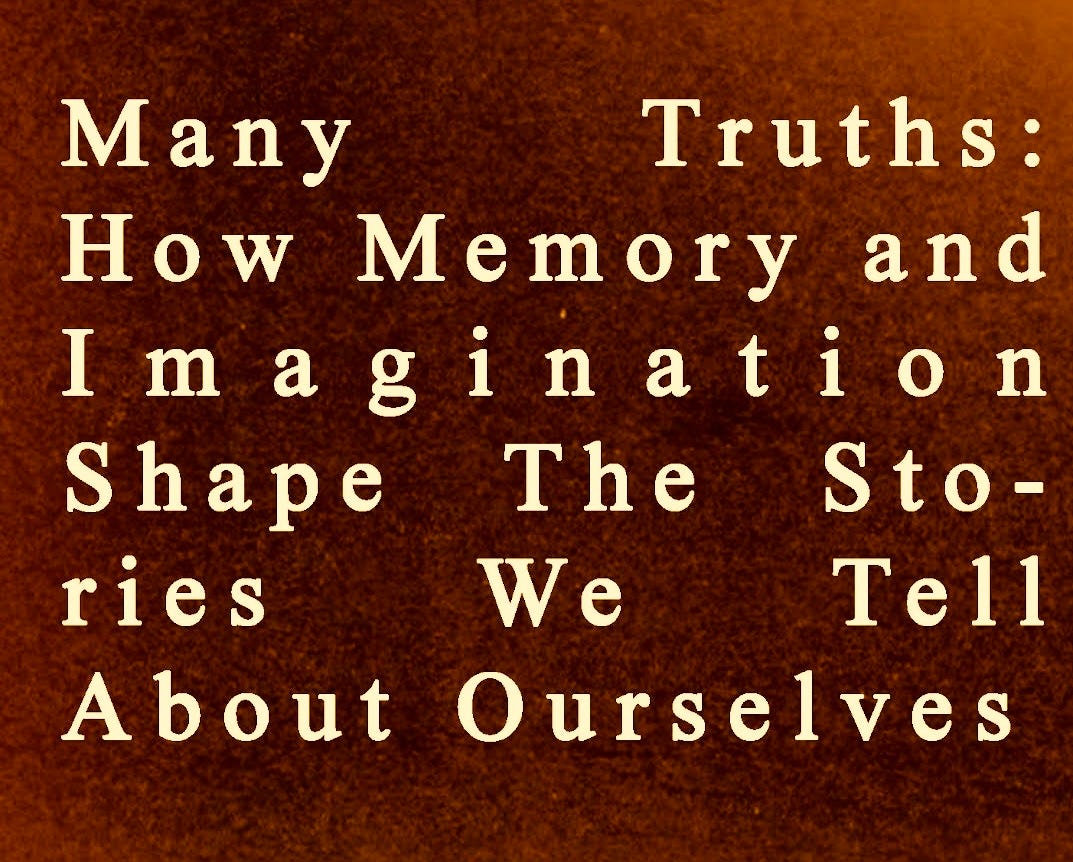
What a lovely, perfectly imperfect kickoff party we had yesterday for our 100 Days of Making & Writing project!
Almost 200 of you gathered to celebrate the launch of this joyful, collective creative endeavor. Glorious!
And I opened the Zoom from the sunny sixth-floor terrace of our hotel here in the bustling sixth arrondissement of Paris, complete with a newly acquired cold (just in time for our trip home tomorrow!), an ample cacophony of street noise, and several mishaps from the get-go.
First of all, I wanted to share music, because, after all, party, but forgot to have my screen share set up in advance, so that caused a bit of screeching. In the moment or so it took me to sort that, I realized I wasn’t recording (which I’d promised to do), so went to set that up, finding that in truth the brightness on the terrace made it unusually difficult to find these settings on my tiny Macbook Neo screen, which I’m not used to (I got this computer for the major amount of traveling this month by plane, train, and car—and am still adjusting given that I’ve been working on a 17-inch Macbook Pro for years). Happy to say, I did sort out the recording (you’ll find the replay at the end of this post!), but by then it was also apparent that a lot of party guests were not muted, and my reminders to mute weren’t resulting in a quick fix.
A helpful attendee reminded me that I can mute everyone myself, but it took me forever to find the “mute all” button because normally when I teach on Zoom, my classes are small and highly participatory, so there’s no need to mute everyone. Plus the brightness of the sun and that tiny screen. But when you are leading a grounding meditation for almost 200 people, you do need that pesky mute setting otherwise you’re going to get some people calling out to their housemates about the timing of the dinner plans, etc. I did eventually, after about a thousand years, find the setting I needed, but not before I had to start over on the guided 4-7-8 breathing exercise meant to, you know, ground us all (still, if you’ve never done 4-7-8, it is magical and worth trying, I promise).
Anyway.
Why am I bothering to share all of this with you? Because it perfectly reflects the imperfect—necessarily imperfect, that is—nature of this project. Please don’t do it perfectly, whatever you do. Please let it be messy, real, organic, strange, breakable and broken. Please let it be alive, unpredictable, feral, and full of unknown possibility. Please let it be a scratch-and-dent invitation to yourself to be more open, more curious, more fallible, more inventive, more willing to take risks (like trying to lead the zoom from the noisy sun-drenched terrace in Paris even if the sunlight makes it hard to see your screen, because you might never get to do that again, and that matters more than the “perfection” of a more controlled set-up in your quiet hotel room).
I loved our imperfect party, where we also reveled in Margaret Atwood’s gorgeous poem “You Begin,”1 and I will remember that hour throughout the next 100 days as we embrace the mess of new making. And to do that that successfully, we’ll need to be playful, and in order to be playful, we need to feel safe enough to take risks and to forgive ourselves when we don’t take risks. We have to meet ourselves where we are and say, “Hi, Self with a capital S. I’m glad you’re here and I appreciate you no matter what you do or don’t make today. I’m not going to judge or measure you, criticize you or turn against you. I’m with you, I’m of you, and I am you. Let’s create whatever comes, let’ssoak it all in and breathe it all out, because in this creative endeavor, we are allowed to be free.”
How It Works
A quick recap of how this project works. For 100 days, you will, each day, make one small thing and write 100 words about it. That’s the whole practice—fifteen to thirty minutes a day, every day, for one hundred days.
The making can be anything (though I’ll give you a guided invitation each day). Maybe it’s a photograph. A sketch. A meal you actually pay attention to. A rearranged shelf. A collage. A letter you may or may not send. Maybe it’s a friend, or a promise, or, as one person at the party said, amends.
Whatever it is, you don’t need supplies or training or a dedicated studio—although I do recommend a dedicated notebook, if you can, but even that does not need to be anything special! Katherine May who writes The Clearing and comments often on her own journaling practice, offers a caution against what she calls beautiful notebooks, because a beautiful notebook can exert too much pressure on us to make the things we write in the notebook worthy of that beauty, when what we want is to make in a way that is free, uncensored, and un-pressured.
May also offers (and thank you, Laura Wershler, for pointing me to this during the party!) advice on leaving blank pages:
Only write on the right-hand page—leave the left blank. This might sound wasteful, but it’s actually very useful. That left-hand page is for your notes and interjections. It leaves you space to add in anything you missed, or to write in comments and thoughts that occur to you when you re-read. If I’m note-taking from a book, I use the left-hand page for my own thoughts and keep the right-hand page for the content of the actual book. I commend this to all of you, because it invites you to have a critical, reflective relationship with your thoughts.
I love this idea of our present and future selves co-existing in the notebooks we’ll keep, mediated by a saved blank space for the version of ourselves that will return to re-engage, reconsider, and potentially even re-invent what we’ve made. All we need is the willingness to make something that didn’t exist before, and then write toward it.
The Nitty Gritty
The 100 days are organized into ten chapters of ten days each, one theme per “decade” of the challenge. Each chapter opens with an essay by me. For those ten essays, I’ll be aiming to create something substantive and personal, maybe a bit poetic, as rich as I can manage with ideas and literary companionship—something that sets the tone and opens the door to what’s coming. And the intro essay for each chapter will include the chapter’s first prompt, or invitation. Then, for the nine days that follow, you receive a a single, specific invitation, to make one thing and write your 100 words.
These daily invitational prompts will be spare on purpose, because the making is yours.
Then, we’ll use the comments to share our experience—you can share your 100 words, you can share your process, you can share your questions, you can share the big new ideas that are beginning to take shape as you devote yourself to your creative spirit for a little bit of time each and every day.
We also have a subscriber chat, where you can share photos—captioned or not—of what you’re making. And to keep the chat somewhat organized, I’ll simply put up an anchor chat post each day, by number, so, Day One, Day Two, etc. If you participated in the Miracle intensive last winter, you have a sense of how that will work. And if you are not on the chat but want to be, you can join anytime. I’ll link to the chat in all of our posts throughout the 100 days in case you decide you want to join later. I think the chat will be fun because we can see the making in real time there.

Our project also includes four live Zoom gatherings across the 100 days: the kickoff party yesterday, a check-in around Day 30, a deeper gathering around Day 65, and a Celebration on Day 100. I am still in Paris until tomorrow, and having the absolute worst time with my calendar, so I will wait to schedule the next three zooms until I’m back in Minneapolis—and then I’ll let you know those dates and put them on the WITD calendar page. The community who shows up for the Zooms is one of the best things about this project.
But, to note, this is your project to do your way, and that includes how much you share or not. For example, you can share what you make in the comments and the subscriber chat, or you can keep it entirely to yourself. It’s an act of generosity to share because we inspire each other and gain strength from each other’s creative energy. But either way, we’re creating fully. The only promise you’re making is that you show up and make the thing.
And even there, we’re allowed to falter, we’re allowed to stop and start, we’re allowed to lose and find our way again, we’re allowed to be fully human and fully welcome and valued for exactly who we are, no matter what or how much we have to give at a certain time. At Writing in the Dark, we are never late and always enough.
Additionally, at Writing in the Dark, one of the permissions has always been that you can break the rule of any exercise I set here, and that’s perfectly allowable and to be celebrated, as I said in response to that question when it came up in the Zoom party—my invitations are only suggestions, there to open a door if you want that, but you are never obligated to follow along as written—this is your project to imagine and fulfill as you wish!
But if you are following my outline, here it is, for handy reference:
Chapter 1 — Making from Memory (Days 1–10)
We begin in the past—not to retrieve it, but to make something from it. We think of memory as a record, but it’s actually a construction. This chapter asks you to return to what you carry and find out what it’s made of.
Chapter 2 — Making from Scraps (Days 11–20)
Constraint is a crucial condition of creativity. This chapter is about working with what’s already here—the found, the leftover, the overlooked—and discovering what limitation makes possible.
Chapter 3 — Making for Someone Else (Days 21–30)
The outward turn. For ten days, the making is an offering. It’s something you make not for yourself or for art’s sake, but for a specific other person. Love and making turn out to be versions of the same gesture.
Chapter 4 — Making Art Badly (Days 31–40)
The permission chapter. This is where you make something without caring whether it’s good—on purpose, with full commitment to imperfection. The freedom that lives on the other side of lowered stakes is one of the most useful things a creative person can find.
Chapter 5 — Making Outside (Days 41–50)
We move the making out of the desk and into the world. The body in space. Attention as the foundational creative act. The natural world as collaborator, instructor, and surprise.
Chapter 6 — Making Something Useful (Days 51–60)
Labor, function, invisible making. What does it cost us and give us to fix something, grow something, build something? This chapter asks what we mean when we call something useful, and whether that question has anything to do with art.
Chapter 7 — Making Through the Lens (Days 61–70)
Framing is a form of seeing. For ten days, you’ll make with a camera—phone camera counts, obviously—and discover the gap between what you photographed and what you were actually looking for.
Chapter 8 — Making Connection (Days 71–80)
Ten days of reaching toward. Human contact as creative act. This chapter is about generosity and genuine attention directed outward—at other people, at the community, at the world you actually live in.
Chapter 9 — Making with Words (Days 81–90)
The homecoming. You’ve been making with your hands and your body and your lens for eighty days. Now you return to language—but you arrive differently than you left.
Chapter 10 — Making to Keep (Days 91–100)
The final chapter is not about making something new. It’s about returning to the best thing you made in the previous 89 days and understanding what it holds— what it means, what it changed, what you want to carry forward.
And in the rest of this post, you’ll find:
Chapter One intro essay on memory, with wisdom from Andre Aciman, Melissa Febos, Dorothy Allison, and Toni Morrison, plus my own experience with re-remembering my first wedding at twenty-one, when I knew nothing and everything all at once, and had the audacity and courage to clap for myself.
Day One Making & Writing Invitation/Prompt | The Hands
100 Day Kickoff Party Zoom Replay
—
Chapter One | Day One | Making from Memory: The Hands
I’m a student of memory, fascinated by its malleability, which seems to me more a function of survival and growth than an error. It seems to me memory is and never was meant to be just a system of retrieval. It is not a file drawer, not a photograph, not a recording made in the moment and played back faithfully later. No, memory is an act. Every time we reach into the past and pull something forward into language, we are making something—constructing it from the materials at hand, which are always incomplete, always partial, always filtered through the light and texture of the air in whatever room we’re in right now.
André Aciman, in his essay “How Memoirists Mold the Truth,” writes about his mother—a woman who would, in the wake of terrible marital arguments, stride into the living room and single-handedly rearrange all the furniture. The sofa to where the bookcase stood. The bookcase shunted to the corner. The armchairs squatting in the new configuration like startled guests. To the outside world, Aciman wrote in his essay, my mother was furiously rearranging furniture. To those who knew better, she was trying to take control and putting a new face to her life. She couldn’t change the facts of her life, so she changed their layout. If changing the layout of your problems doesn’t necessarily solve them, Aciman observes, it does make living with them easier.
Memoirists, Aciman argues, do exactly the same thing. We can’t erase the ugliest moments of our past, and we can’t fabricate new ones. So we shift things. We nudge them. We rearrange the furniture of our lives until we find a configuration we can inhabit. Aciman writes:
Writing alters, reshuffles, intrudes on everything. As small a thing as a shifty adverb, or an adjective with attitude, or just a trivial little comma is enough to reconfigure the past.
And maybe this is why we write. We want a second chance, we want the other version of our life, the one that thrills us, the one that happened to the people we really are, not to those we just happened to be once.
Then Aciman gives us the sentence I want to press into your hands at the beginning of these 100 days: